By GSA Worldwide Logistics Editorial Team · Updated 2026-08-22
Container shipping from the Netherlands to India moves via FCL and LCL service to major ports including Nhava Sheva (JNPT), Mundra, Chennai, and Kolkata. GSA Worldwide Logistics collects cargo across the Netherlands, Belgium, and Germany, handles export documentation, and coordinates door-to-port delivery through one dedicated contact for every business shipment.
What does container shipping from the Netherlands to India involve?
Container shipping from the Netherlands to India moves cargo through a structured, end-to-end process managed by a single logistics partner. The trade lane connects some of Europe’s busiest ports — principally Rotterdam, Antwerp, and Hamburg — directly with India’s four major seaports: Nhava Sheva (JNPT, near Mumbai), Mundra, Chennai, and Kolkata. GSA Worldwide Logistics coordinates every step, from European pickup through Indian customs clearance, under one booking.
For export/import managers, the process breaks down into three operational phases. First, the cargo — whether palletized goods, machinery, or full container loads — is collected across the Netherlands, Belgium, or Germany and consolidated at a Dutch terminal. Second, the freight forwarder handles export customs clearance and books the container onto a vessel departing from [container shipping from rotterdam port to india](https://gsalogix.com/car-shipping-netherlands-to-cape-town-south-africa/) or container shipping from the antwerp port to india. Third, the shipment arrives at the Indian gateway port. Import customs formalities and final delivery to the client’s facility are arranged.
How does FCL differ from LCL for India-bound shipments?
FCL shipping to India (Full Container Load) suits clients whose cargo fills an entire 20-foot or 40-foot container — common for large machinery shipments or commercial goods. The container is sealed at origin and opened only at destination, reducing handling risk and transit times. Less-than-container load (LCL) consolidates smaller shipments with other cargo, making it cost-effective for partial loads, though it requires longer planning and shared space. GSA Worldwide Logistics offers both options, matching the service to the shipment volume.
What are typical transit times from Rotterdam or Antwerp to India?
Rotterdam to Nhava Sheva transit time averages 18–22 days on direct services, depending on the carrier and sailing schedule. For cargo routed via Antwerp to Mundra container freight, transit times run 21–25 days. These estimates assume no port congestion or customs delays. The Netherlands-to-India air option — Amsterdam Schiphol to Delhi — takes roughly 8 hours but costs significantly more, making sea freight the standard choice for commercial volumes.
How do you choose between FCL and LCL for India?
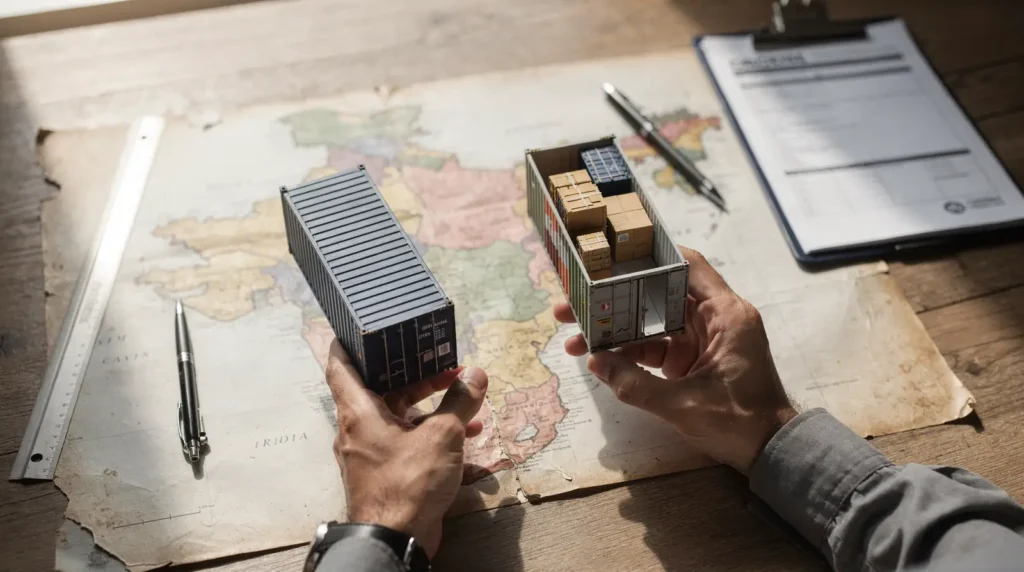
The decision between FCL shipping to India and LCL (less-than-container load) depends entirely on cargo volume. Container shipping from the netherlands to india offers two distinct paths: full container load for clients with enough cargo to fill an entire container, and LCL for smaller quantities that can be consolidated with other cargo. Choosing the wrong option inflates costs significantly or delays delivery by weeks.
What determines the right container mode for India shipments?
The final destination in India affects the duration and the type of freight transport chosen. A shipment bound for Nhava Sheva Port near Mumbai moves differently than one destined for a smaller inland container depot. Container shipping from netherlands to major seaports india like Mundra, Chennai, or Kolkata requires understanding which port serves the final destination best. The wrong port selection adds 5-7 days of inland trucking and customs delays.
How does cargo volume dictate the FCL vs LCL choice?
Measure total cargo volume — anything under 15 cubic meters typically suits LCL consolidation.
Assess cargo density — heavy machinery or dense goods often justify FCL even at lower volumes.
Check destination port — container shipping from rotterdam port to india to Nhava Sheva runs frequent LCL consolidation services; smaller ports may not.
Evaluate time sensitivity — LCL requires consolidation time at origin and deconsolidation at destination, adding 3-5 days versus direct FCL.
Compare total landed cost — include origin handling, ocean freight, destination charges, and customs clearance fees for both options.
Container shipping from the antwerp port to india follows the same logic: Antwerp to Mundra container freight for full loads, or LCL for partial shipments. GSA Worldwide Logistics handles every type of cargo, from a single pallet to a full, complex, multi-container project, ensuring the right mode for each shipment.
What are the key steps to book a container to India?
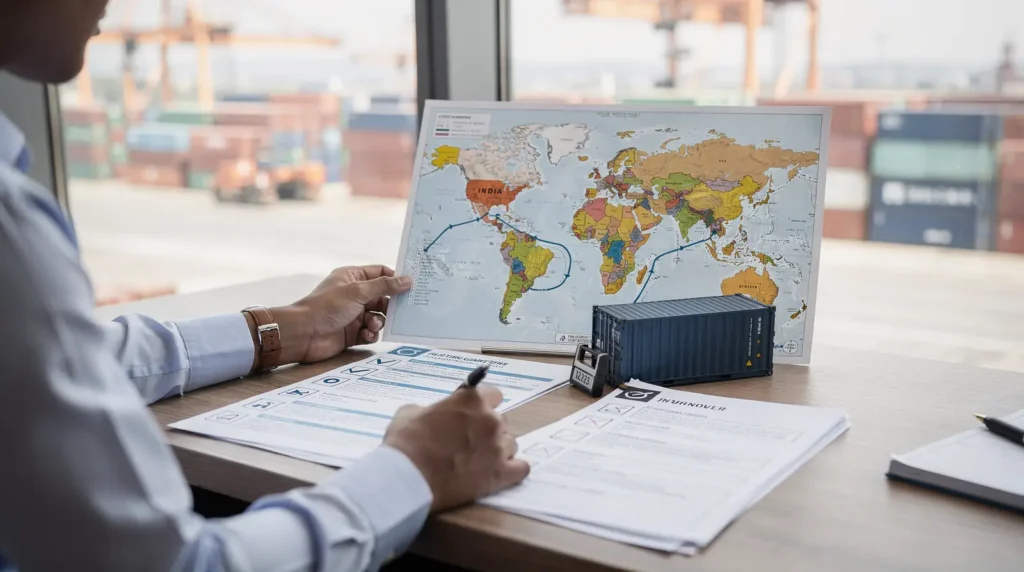
Booking a container to India involves a structured six-step process: pickup from the origin, export documentation, customs clearance, ocean transport, import clearance, and final delivery. GSA Worldwide Logistics manages every stage under a single point of contact, eliminating the need for clients to coordinate between separate suppliers. This end-to-end approach prevents the delays and miscommunication that commonly derail international freight.
How does the pickup process work for shipments to India?
The logistics provider arranges collection from across the Netherlands, Belgium, and Germany under a single booking. A vehicle or cargo is collected at its location. Transported back to the Dutch terminal without being passed between different carriers. This unified collection network covers major Dutch cities including Amsterdam, Rotterdam, Groningen, and Maastricht. Well as Belgian and German pickup points.
What documentation and customs steps are required?
Export customs clearance is handled in full to legally and smoothly export goods from the Netherlands and other European countries. The provider manages the complete export documentation and customs formalities required at the point of departure. After ocean transport, import customs clearance at the Indian destination port ensures the cargo clears without unnecessary storage costs or delays.
How do clients initiate the booking process?
Clients send pickup details — typically via WhatsApp — and receive a tailored quote within office hours, entirely without obligation. The quote covers the full scope of [container shipping from the netherlands to india](https://gsalogix.com/nl/verzending-vanuit-nederland-en-belgie-naar-india/), including container shipping from rotterdam port to india or container shipping from the antwerp port to india. For full container loads, FCL shipping to India is quoted based on the specific cargo volume and destination port. The Rotterdam to Nhava Sheva transit time and Antwerp to Mundra container freight rates are provided as part of the comprehensive quote, giving clients clear cost and timeline expectations before any commitment.
How long is the Rotterdam to Nhava Sheva transit time?
The Rotterdam to Nhava Sheva transit time typically averages 18–22 days for direct container services, depending on the vessel schedule and routing. This duration covers the sea crossing from the Port of Rotterdam to Nhava Sheva Port (also known as JNPT), located near Mumbai and one of India’s busiest container gateways. The exact transit window shifts based on whether the shipment moves as FCL shipping to India (full container load) or LCL (less-than-container load). Consolidation and deconsolidation add handling time.
What factors affect the Rotterdam to Nhava Sheva transit time?
Several variables influence the actual sailing duration. The shipping line’s weekly schedule determines departure windows — missing a cutoff adds 5-7 days. Transshipment at hubs like Colombo or Singapore extends transit by 3-5 days compared to direct calls. Seasonal congestion at Nhava Sheva Port can delay berthing by 1-3 days. GSA Worldwide Logistics monitors these variables closely to ensure cargo arrives as scheduled, giving clients peace of mind for time-sensitive shipments.
How does FCL shipping compare to LCL for this route?
Container shipping from rotterdam port to india via FCL offers the most predictable timeline. The container moves directly from the terminal in Rotterdam to the vessel, then straight to Nhava Sheva without intermediate handling. For LCL shipments, the cargo must first consolidate at a warehouse near Rotterdam, then break bulk at the destination — each step adds 2-4 days. GSA Worldwide Logistics handles both options, coordinating pickup across the Netherlands, Belgium, and Germany under a single booking.
What mistakes should you avoid when shipping containers to India?
Shipping containers from the Netherlands to India fails most often because of incomplete paperwork. Missing or incorrect documentation causes delays at Indian customs and generates unnecessary storage costs at the destination port. Exporters who treat documentation as an afterthought lose an average of several days per shipment while cargo sits idle.
How does incomplete paperwork delay container shipping from the Netherlands to India?
Container shipping from the netherlands to india requires precise documentation for every stage. The bill of lading, commercial invoice, packing list, and certificate of origin must match exactly. A single discrepancy between the invoice value and the declared cargo weight triggers inspection holds. Indian customs authorities enforce strict compliance, and any gap in the paperwork chain stops the container from clearing.
Why should clients avoid coordinating multiple logistics parties?
Container shipping from rotterdam port to india or container shipping from the antwerp port to india becomes risky when clients manage separate providers for pickup, export clearance, ocean transport, and import customs. Each handoff introduces miscommunication. A trucking company may deliver cargo to the wrong terminal. The export agent may file documents that the shipping line rejects. The solution is a single dedicated point of contact who oversees every step from collection in Europe to delivery at the Indian destination.
What specific documentation matters for Antwerp to Mundra container freight?
Antwerp to Mundra container freight demands familiarity with India’s unique inspection procedures and customs requirements. The brand’s team has hands-on experience with these specific rules. Clients who assume Indian customs follows European standards face rejected filings and demurrage charges. FCL shipping to India requires the shipper to verify that the container seal number, weight certificate, and hazardous goods declaration (if applicable) all match the shipping instructions. Rotterdam to Nhava Sheva transit time averages 18-22 days, but poor documentation can double that timeline.
The single most effective mistake to avoid: never split responsibility across multiple uncoordinated parties. One team handling the entire chain eliminates the errors that cost time and money.
Conclusion
In closing, container shipping from the Netherlands to India represents a straightforward, cost-effective solution for businesses seeking reliable international trade routes. GSA Worldwide Logistics brings established expertise in navigating the documentation, customs requirements, and port operations unique to Indian gateways, ensuring your cargo arrives on schedule and without unnecessary complications. Whether you require full container loads or consolidated shipments, our team transforms the complexity of intercontinental logistics into a seamless, transparent process from departure to delivery.