International vehicle shipping can feel complicated the first time you export a car to West Africa. How does the vehicle get from the seller to the port? Which shipping method is right? What documents are needed, and what happens once the vehicle actually reaches Togo? This guide walks through how car shipping from the Netherlands to Lomé, Togo actually works, from the moment a vehicle is purchased to the moment it clears customs at the other end.
The Range of Vehicles and Cargo That Travel This Route
Passenger cars remain the most common shipment on this route, but the range extends well beyond that. SUVs, electric vehicles, vans, pickup trucks and larger commercial trucks all travel by RoRo when they’re operational, while agricultural machinery, construction equipment, vehicle parts and household goods typically travel inside a container instead. Some customers ship a single family car bought from a Dutch dealership; others run a regular export schedule with several vehicles a month.
Why So Many Buyers Purchase in the Netherlands for Export to Togo
The Netherlands has become a popular market for buyers exporting to Africa, thanks to the wide selection available through dealerships, private sellers and online auctions — often with detailed maintenance histories and a broader choice of models than what’s available locally in Togo.
Buying the vehicle is only the first step. It then needs to be collected from wherever it is — a dealership, an auction site, a private address or a business location — and brought to the export terminal, where the export documentation, customs formalities and the booking to the Port of Lomé are all arranged. First-time exporters in particular tend to underestimate how many small steps sit between paying for the vehicle and seeing it actually loaded.
Vehicle Collection: Where the Process Really Begins
International shipping doesn’t start when a vessel leaves port — it starts with collection. Vehicles bought in the Netherlands turn up at dealerships, private addresses, auction sites and company premises, and each one may need a slightly different collection schedule. Arranging this as part of one structured shipment, rather than juggling separate transport providers, is usually the simplest way through this stage, and it depends on accurate pickup details and vehicle information being provided upfront.
Understanding the Export Paperwork
One of the most common questions is whether customers need to handle the export documents themselves — in most cases, that paperwork is prepared as part of the shipment. Before a vehicle can legally leave the Netherlands, an EXA Export Declaration is submitted to customs, along with any supporting documentation the shipment requires. It’s worth double-checking that the make, model and identification details match exactly between the quotation and the paperwork used for export, since small mismatches are a common source of delay.
Most of this work happens behind the scenes rather than in front of the customer, which is partly why export documentation has a reputation for being more complicated than it actually is in practice. Once the paperwork is confirmed and the shipment is approved for export, attention shifts from admin to choosing the right shipping method.
RoRo or Container: Choosing the Right Method
The two main options for shipping a vehicle from the Netherlands to Togo are RoRo (roll-on, roll-off) and container shipping, and they suit different situations. Both are widely used and well established on this route, so the choice usually comes down to what exactly is travelling rather than one method being inherently better.
RoRo Shipping
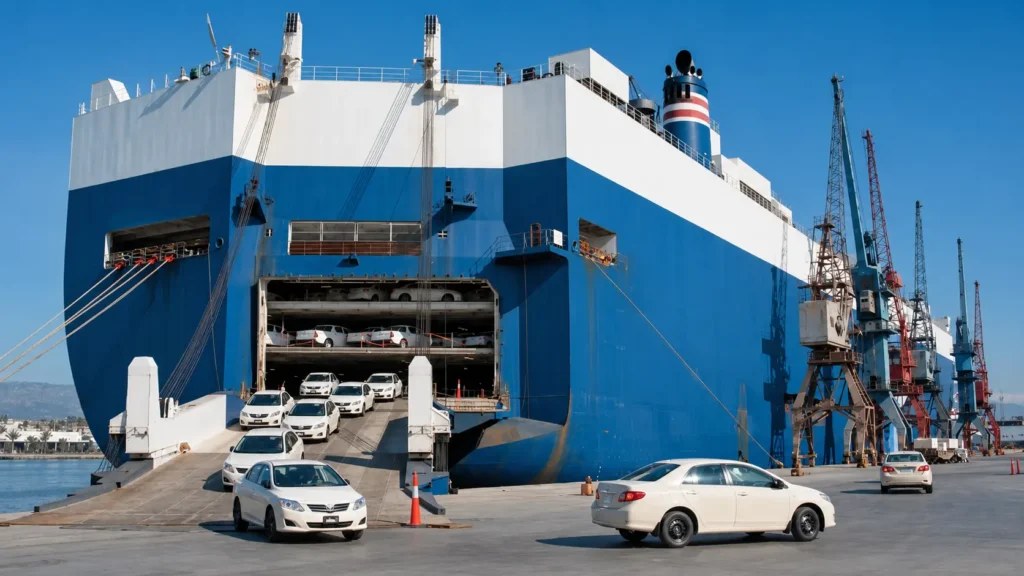
RoRo suits an operational vehicle that can be driven onto and off the vessel — no container needed. It covers passenger cars, SUVs, electric vehicles, vans, pickup trucks, commercial vehicles and trucks, and it’s usually the most efficient option for a single vehicle travelling on its own.
Container Shipping
A container makes more sense once a shipment includes more than a vehicle — household goods, personal belongings, machinery, vehicle parts or general commercial cargo can all travel alongside it, in either a 20ft or 40ft container depending on the volume involved.
There’s no single right answer here: a running vehicle on its own usually points to RoRo, while extra cargo or multiple items travelling together usually points to a container. The pickup location, the vehicle type and the nature of the cargo all factor into which is the better fit.
Preparing the Vehicle Before Collection
Once the shipping method is settled, getting the vehicle itself ready matters just as much as the paperwork. Make, model and VIN should match exactly across every document. Photographing the vehicle’s condition before collection creates a useful record, and personal belongings are best removed unless the shipping method specifically allows extra cargo. For a RoRo booking, all keys need to be available so the vehicle can be driven on and off the vessel.
None of this takes long once you know what’s expected, and having it ready before the collection date rather than on the day itself is usually what separates a smooth export from a delayed one.
The Voyage to the Port of Lomé
Once loaded, the shipment sails from a Dutch or nearby European port toward Lomé — one of the deepest natural harbours on the West African coast and a major transshipment hub for the wider Gulf of Guinea, which is part of why so many shipping lines call here directly. Transit typically runs in the range of three to five weeks, depending on the vessel’s schedule and routing. A booking reference and an estimated arrival window follow once the vessel is under way.
Some sailings run direct from a Dutch port, while others route via a hub port along the way, which can add a few days to the overall transit. Either way, the routing and expected timeline are confirmed at the point of booking, so there’s no guesswork involved once the shipment departs.
Arrival and Customs in Togo
On arrival, Togolese customs check the shipment against the paperwork filed before departure. A vehicle needs to clear import duties before it can be registered locally, and a container’s contents are checked against what was declared. Accurate, consistent paperwork from the start is what keeps this stage short rather than drawn out.
What Shipping to Lomé Costs
Price depends mainly on the shipping method (RoRo generally costs less than a container), the size and condition of what’s travelling, and whether extra cargo or multiple vehicles are involved. A single running vehicle by RoRo sits at the lower end; machinery, several vehicles or a full container scale up in line with the space and handling they need. Pickup location plays a smaller role too, though it rarely changes the total by much. A fixed quote, based on the actual shipment, is always available on request.
Who Relies on This Route
The customers behind these shipments vary widely: private buyers sending a single family car, dealerships and exporters moving vehicles in volume, businesses shipping commercial vehicles or machinery, and returning residents bringing a personal vehicle back to Togo. The process stays the same regardless of scale, which is one reason it works equally well for a one-off shipment and a recurring monthly export schedule.
Common Mistakes to Avoid When Shipping a Vehicle to Togo
A handful of avoidable mistakes account for most delays: incomplete or inaccurate vehicle details on the quotation, transport arranged at the last minute, assuming every shipping method offers the same flexibility, and incomplete pickup or contact information. A vehicle sent for collection with personal belongings still inside it, when the booking is RoRo rather than a container, is another frequent one. Confirming the details early and preparing documentation in advance heads off nearly all of it.
Frequently Asked Questions About Shipping a Car to Lomé
How do I start the shipping process?
Send the pickup location, the make and model of the vehicle, and the destination — from there, the shipment can be assessed and the available options explained.
Which is better, RoRo or container shipping?
Neither is universally better. RoRo suits an operational vehicle travelling alone, while a container suits additional cargo or household goods travelling with it. The right choice depends on the shipment.
Can vehicles be collected anywhere in the Netherlands?
Yes, along with pickup in Belgium and Germany on the same booking. France can be arranged on request.
Which types of vehicles can be shipped to Togo?
Passenger cars, SUVs, electric vehicles, vans, pickup trucks, commercial vehicles, trucks and machinery all travel this route regularly, either by RoRo or inside a container.
How long does a shipment to Lomé usually take?
Collection and export formalities typically take a week or two, and the sea crossing runs roughly three to five weeks, so most shipments arrive within four to seven weeks of booking.
Can the shipment be insured?
Yes — it’s worth raising during booking so the cover matches the vehicle, the cargo and the method being used.
Will I get updates once the shipment has left the Netherlands?
Yes — a booking reference and an estimated arrival window follow once the vessel is under way, so there’s a clear sense of timing for the rest of the journey.
Final Thoughts
International vehicle shipping doesn’t need to be complicated when it’s properly planned. Understanding collection, export documentation, the shipping methods and the arrival process in Togo makes it easier to prepare a shipment with confidence, whether it’s a single family car or a regular export schedule to West Africa. Good planning, clear communication and accurate paperwork remain the foundation of a smooth shipment from start to finish, regardless of whether the route runs through RoRo or a container.
For the full service overview and to request a personalised quote, visit our Shipping to Lomé page.